
HomeGuidesSilage wrap: the questions farmers ask
Silage wrap: the questions farmers ask
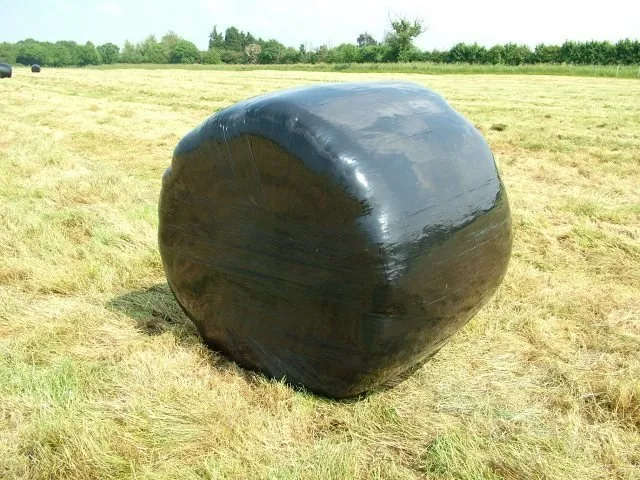
For most round bales in UK conditions, wrap six layers. Four is the accepted industry minimum and will seal a bale in good conditions, but six is the working standard on farms round here - fewer and air ingress risks spoilage; more again gives extra protection for wet material or long outdoor storage. The right film depends on your crop moisture, storage period, and baler. D G Jones Agri stocks Silawrap, Rani Plast, Novatex, and Tama - each suited to different situations and machines.
How many layers of silage wrap should I use on a round bale?
The short answer is: enough to seal the bale properly, and then one or two layers more than you think you need.
Industry guidance sets four layers as the minimum for a standard bale. We would tell you to wrap six - and more again when the material is wetter than ideal, bales are going to sit outside through winter, or you are carrying bales any distance by tractor or handler with a realistic risk of stretch or puncture.
The case for more layers is straightforward. Silage ferments anaerobically - in the absence of air. Every thin patch or pin-hole is a potential entry point for oxygen, mould, and heating. Extra film is cheap compared with a ruined bale.
Some farmers push to eight layers for premium or long-stored material. That choice has to be weighed against film cost per bale - but for livestock farmers in Mid, South and West Wales wintering stock on bales made in uncertain weather, six layers is the working standard and we would not go below it.
Does the width and gauge of the film change how many layers I need?
Yes - and this catches buyers out more often than they expect.
Standard round bale wrap is typically available in 500 mm or 750 mm widths and is applied with overlap on each pass. A narrower film needs more passes around the bale to achieve equivalent coverage; a wider film covers faster.
Gauge - the thickness of the film - matters equally. Heavier-duty film can achieve the same barrier protection with fewer layers than a standard film. If you are comparing products on cost per roll, check the gauge before drawing conclusions. A thicker film at a higher price per roll may cost less per effective protective layer once you account for the number of layers required.
The wrap brands we stock - Silawrap, Rani Plast, Novatex, and Tama - each carry their own specifications. Ring us with your baler make and model and we can point you at the right roll size and gauge for your machine.
Which silage wrap is right for my crop and storage conditions?
There is no single universal answer, but these principles narrow it down.
Higher-moisture crops - direct-cut grass, early-cut ryegrass, whole-crop cereals - benefit from films with consistent gauge and strong stretch properties. Any weak spots risk splitting under the internal pressure of wet material as it ferments and gases build.
Longer storage or outdoor storage calls for UV-stabilised film. Most quality wrap carries some UV protection, but how long that protection holds varies between products. If you are making bales in June and opening them the following February, the quality of that UV protection matters.
Machine compatibility is non-negotiable. Not all film runs cleanly on all balers. If you have had problems with film tearing or inconsistent application, it is worth talking through whether it is a machine issue or a film issue before you order the same product again. Brands like Rani Plast, Novatex, and the Tama netwrap range are designed for consistent tension and feed on a wide range of equipment.
Does netwrap or twine before wrapping make a difference?
It makes a difference to bale shape, which in turn affects how the film sits on the bale.
Netwrap tends to produce a tighter, more consistently shaped bale that films more evenly. Twine can leave the bale slightly less uniform, especially with leafy or mixed-herbage material. A bale with surface bulges or seams is harder to wrap without leaving gaps - and gaps mean air ingress.
FAQ
Q: Can I use fewer layers if I am storing bales under cover? Under-cover storage reduces UV degradation and physical damage risks, but it does not change the fermentation biology. The layer count is set by the need for an airtight seal, not by where the bale is stored, so six stays the standard under cover as well. Four is still the minimum regardless of storage location - but being inside is not a reason to drop to it.
Q: How long after wrapping is it safe to move bales? The film needs time to bond to itself before bales are moved or stacked aggressively. Most manufacturers recommend waiting at least 24-48 hours after wrapping before first movement.
Q: Will cheaper wrap cost more in the long run? Possibly. A film that fails - through gauge inconsistency, poor UV protection, or machine incompatibility - costs you in spoilage, time, and replacement material. We stock brands we have seen perform reliably. We are not always the cheapest price on paper, but we stock what works and we tell you straight when something is not right for your situation.
Q: Do you deliver silage wrap? Yes - we deliver to farms across Mid, South and West Wales and surrounding areas. Call 01591 610278 or email sales@jones-agri.co.uk to discuss your order and we will confirm delivery options and lead times.
Q: When should I order to avoid running out mid-season? Demand spikes sharply when the weather turns and farmers cut in quick succession. If you know roughly how many bales you will be making, it is worth ordering before the season starts rather than chasing stock when everyone else needs it at the same time.
Talk to us before silage season
Silage wrap is not a commodity you want to get wrong mid-season. Stock sells out, specifications matter, and your baler has its own preferences.
D G Jones Agri has been supplying livestock farmers and contractors in Mid, South and West Wales for over 50 years. We farm too - we stock what we know works and we tell you straight what suits your machine and your crop. Have a word before you need it, not when you have run out - we are open Mon-Fri 9am-5pm and Saturday mornings.